
Congestion Pricing Part Three:
Making it work in Nairobi

This is part three of a three-part essay based on my master’s thesis. It discusses why congestion pricing is the most effective way to address traffic congestion in large cities. Part one can be found here and part two here.
Implementing the system
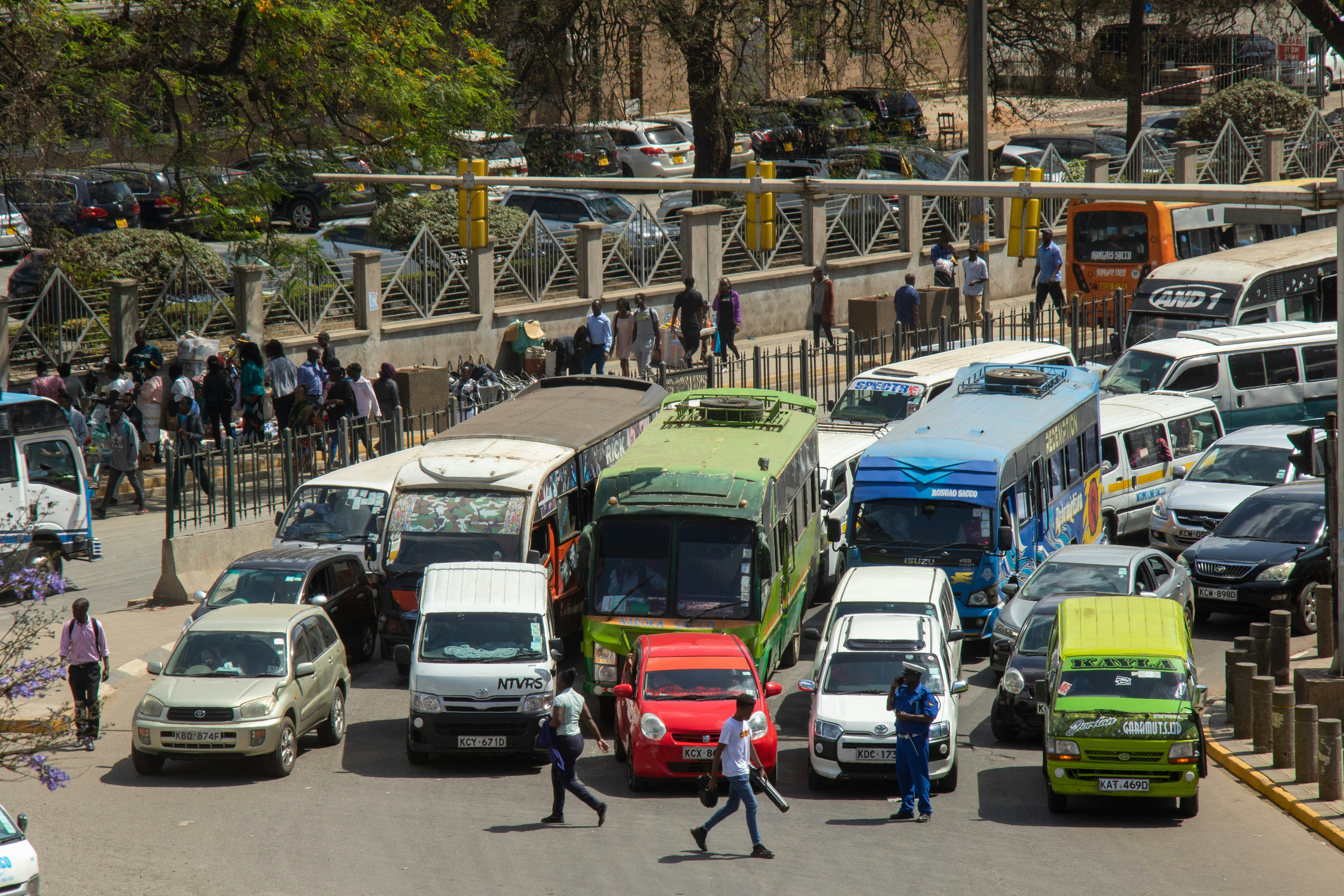
Despite successful implementation in cities such as London and Singapore, congestion pricing is a fairly complex solution to introduce into a developing country context. There are questions about the political supportability of such a scheme. Imposing financial costs on the powerful motorist class in the city could engender a backlash that would hamstring the implementation. Additionally, several technical considerations have to be taken into account. Selecting the wrong collection and enforcement technology could lead to failure, as could picking the wrong toll booth locations or setting the charge too high/low. If these elements are not adequately looked into, Nairobi risks failing to implement congestion pricing. Worse still, the city could implement the scheme only to discover that congestion has been displaced to other parts of the county.
Collection and enforcement technologies
The technology chosen to administer congestion pricing in the city will make or break the system. The technology must be fast, easy to use, and easily verifiable in case of disputes over non-payment. Speed and ease of use are especially key, as the implementation may otherwise introduce a bottleneck at the toll stations.
Given its large vehicle population, a manual toll system is unlikely to work in Nairobi. Fortunately, the relative ubiquity of mobile money and 4G mobile internet speeds make the city an ideal place to implement an automated toll collection system. The Nairobi county government is already leveraging this technology to collect parking fees, using cell phones as the means of payment. The system runs on the JamboPay platform, which could offer a starting point for exploring how to implement a mobile money-based tolling system for congestion pricing. At over 80%, Kenya has one of Africa's highest Mobile phone penetration rates. Penetration rates in Nairobi are significantly higher than the national average, closing in on 100%. Using mobile money effectively turns all these cell phones into potential toll booths, considerably reducing the infrastructure and logistics necessary for collection. The ‘toll booths’ on the main corridors into and out of the city center could, therefore, effectively become reminder and verification stations, with billboards reminding motorists to pay their congestion toll and providing information on how to do so.
Enforcement would then consist of county council officers with cell phones who periodically spot-check whether a motorist has paid their congestion fee by directly searching for a car's license plate on a real-time database. This is how enforcement is currently handled for the parking fee program and would be familiar to the officers.
Nine main corridors provide access to Nairobi's city center. These corridors provide ideal locations for station checkpoints covering the bulk of traffic going into and out of the city. The stations are listed below:
Thomson Estate on Ngong Road
Kitisuru on Waiyaki way
Runda Estate on Limuru Road
Ruiru on the Thika Road
GSU on Outer Ring Road
Mathare on Juja Road
Madaraka on Jogoo road
Enterprise road junction on Mombasa Road and,
Nairobi Dam Estate on Langata Road
Each toll checkpoint would consist of a Nairobi County Council booth with officers flagging down vehicles. Each toll station would check a predefined number of cars every hour. Increasing the number of attendants manning the station would quickly increase the number of vehicles checked until the checkpoint demonstrated sufficient deterrence of toll skipping. Similar adjustments could be made to fines charged for non-payment of congestion fees.
Determining the congestion fee
Perhaps the most challenging part of implementing the congestion-pricing program in Nairobi would be determining the appropriate fee. Setting the cost too high might induce strong resistance from the motorist and promote corruption, dooming the program to failure. However, setting the fee too low would prove ineffective in reducing the number of cars moving into the city, thereby rendering the program useless. Congestion pricing would not survive long if it could not quickly show results.
The Nairobi City Council digital parking permits program provides a proxy for the financial burden Nairobi residents are willing to bear to reduce the overcrowding of resources in the city. The average charge for the central business district is Ksh 300, while a monthly pass costs Ksh 5,000. It is instructive to note that the congestion fee introduced in London, a much wealthier city, was 5 pounds (approximately $8). This fee reduced the number of cars entering the city center by 70,000, equivalent to twice the number of Matatus in Nairobi. Implementing a flat daily fee would be the most straightforward approach, but it is also most likely to receive pushback from people who only want to pass through the city or spend a few hours in the CBD. Implementing a time-based congestion pricing scheme where motorists are only charged if they choose to enter the city during peak traffic hours would be one way to get around this resistance. However, it would also increase the complexity and cost of the system, making it a risky option to pursue.
Political supportability
An administration is bound to receive pushback whenever it attempts to increase fees on residents. It is likely to be no different with the implementation of congestion pricing. As mentioned, the Matatu Owners Association, which controls upwards of 20,000 cars that run along Nairobi’s busy streets, wields considerable political power and is likely to look unfavorably on any fee increase.
However, traffic congestion in Nairobi also imposes a direct cost on the Matatu industry, offering an opportunity to make allies of the MOA. Being stuck in traffic for an hour imposes a direct financial cost in terms of fuel wasted and fees lost. Many Matatus work on fixed payment contracts where all surplus revenue accrues to the Matatu driver and the Matatu tout. This is done to reduce moral hazard by aligning the driver’s incentives with maximizing the number of trips that (s)he makes in a day to maximize revenue while reducing the Matatu owners monitoring costs. A less congested city would mean that Matatu owners could charge a higher flat rate while increasing income for drivers and touts. It would be helpful to work towards gaining the support of the MOA by quantifying the benefits that would accrue to their industry if they supported this move to reduce congestion pricing, putting a powerful ally in the county government’s corner. This alliance could be further strengthened by offering reduced tariffs to higher-capacity vehicles to discourage the non-essential use of private vehicles for transportation within the city.
Finally, Congestion pricing lends itself to support from the city's enormous population of urban poor and lower-middle-class residents as the cost would fall primarily on car owners. If well implemented, congestion pricing acts as a progressive Pigouvian tax that allocates costs for creating and maintaining public infrastructure based on both intensity of use and ability to pay.
If well implemented, congestion pricing acts as a progressive Pigouvian tax that allocates costs for creating and maintaining public infrastructure based on both intensity of use and ability to pay.
Conclusion
Congestion pricing offers Nairobi a tool to address traffic congestion cheaply, fairly, and equitably. The approach has worked in some of the world's most congested city streets. It provides an alternative to traditional solutions such as road construction and public transit provision. The low number of access points to Nairobi's city center lends itself to a cost-effective implementation of congestion pricing. This also increases the administrative feasibility of the solution by reducing the system's complexity. The Nairobi County Government administers an electronic parking payment system in the city, providing evidence of its ability to administer a congestion-pricing program. Evidence from cities like London shows that congestion pricing can remove many vehicles from the city streets with fees comparable to those currently charged by the Nairobi County Government for parking within the city center.
Despite the strong evidence favoring congestion pricing, the city’s current urban development master plan (NIUPLAN) does not mention congestion pricing. Instead, it proposes additional road construction and the introduction of mass rapid transit systems as the solutions to traffic congestion in the city. This plan risks introducing more than a billion dollars worth of new transportation infrastructure with limited impact on reducing what the NIUPLAN acknowledges as one of Nairobi’s key urban development challenges. The NIUPLAN should, therefore, be revised to prioritize congestion pricing. Fifty years of research into induced demand strongly points to congestion pricing as the key to Nairobi regaining its historical reputation as Africa’s “Green City in the Sun.”
This is the last post in my Congestion Pricing series. I hope it was helpful to you. Please share your thoughts and feedback in the comments. My next few posts will focus on the mini-grid sector in Africa and the distributed renewable energy (DRE) landscape. The first post will be out next week!